
Wild Wester Ross: The Ultimate Gairloch Wildlife Guide
Wester Ross is one of the last great wildernesses in Europe. At Gairloch Highland Lodge, we provide a front-row seat to one of the most spectacular natural shows in the British Isles.
Whether you are looking for Gairloch wildlife spotting tips or a comprehensive North Coast 500 wildlife guide, the rugged landscape surrounding the Lodge is a sanctuary for rare and iconic species. Use this guide to help you identify our local residents during your stay.
🦅 Get This Week’s Live Sightings Planning your wildlife watch today? Check our Weekly Gairloch Report for the latest local sightings, BBC tide times for wildlife spotting, and current weather conditions. See what’s being spotted in the glen and harbour right now!

Marine Life: Giants & Guardians
The North Minch is a nutrient-rich maritime ‘superhighway’. Because the water here is deep and clean, it is widely considered one of the best places to see Minke Whales in Scotland.
Common & Grey Seals
Both species are year-round residents in the sea lochs around Gairloch.
- Common (Harbour) Seals: Have a ‘dog-like’ face with a concave profile. They are often seen hauled out on rocks at low tide.
- Grey Seals: Much larger with a longer, ‘horse-like’ snout. They are often curious and may bob in the water to watch you (a behaviour known as ‘spy-hopping’).
- Best Time: Year-round. Look for Grey Seal pups on secluded beaches from October to December.
Minke Whales (Balaenoptera acutorostrata)
The Minke is Gairloch’s most famous summer visitor. Growing up to 10 metres, they are sleek, fast, and often curious about boats.
- How to spot: Look for a ‘slick’ on the water’s surface followed by a small, curved dorsal fin.
- Best Time: May to September.
Harbour Porpoises (Phocoena phocoena)
Locally known as ‘Puffing Pigs’ due to the sneezing sound they make when surfacing, these are our most frequent cetacean visitors. They are shy and triangular-finned, often seen ‘rolling’ through the water in the quieter corners of the bay.
The Elusive Otter
Gairloch is frequently cited as one of the best places to see Otters on the NC500. These shy hunters are best spotted at dawn or dusk along the kelp-covered shorelines. Look for the distinctive ‘V’ wake as they swim between the rocks.
Avian Wonders: From Sea to Summit
Gairloch is a premier destination for birdwatchers. Our diverse habitats mean you can spot rare mountain birds in the morning and coastal hunters in the afternoon.
- White-tailed Sea Eagles: With a 2.5m wingspan, these ‘flying barn doors’ are coastal specialists. Look for them patrolling the cliffs and sea lochs around the village.
- Golden Eagles: The ‘King of Birds’ prefers the inland peaks. They are best seen soaring over the high ridges of the Torridon mountains.
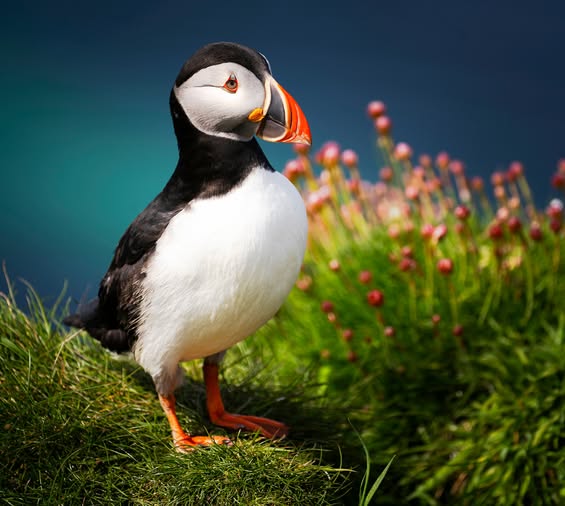
- Puffins: These iconic birds nest on the Shiant Isles. To see them, book one of the many puffin trips from Gairloch between late April and early August.
- Black Grouse: If you head out to the moorland early in the morning, you might hear the strange ‘bubbling’ and ‘hissing’ of the Black Cock as they perform their traditional courtship dance.
Terrestrial Treasures: Land, Woods & Glens
Beyond the shoreline, Wester Ross unfolds into a mosaic of ancient ‘temperate rainforests’ and rugged mountain moorland.
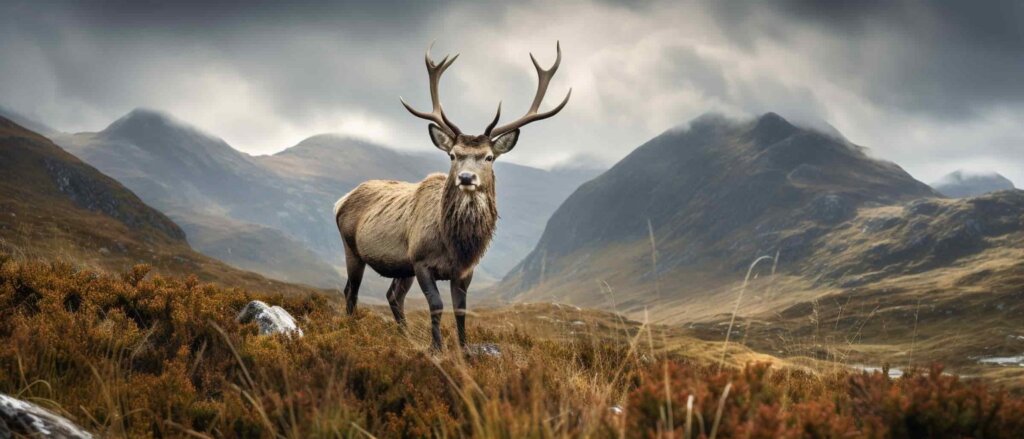
- Red Deer: The UK’s largest land mammal. In the Autumn Rut (late Sept–Oct), the glens echo with the prehistoric roars of stags.
- Roe Deer: Smaller and more delicate than Red Deer, look for them in the quiet corners of Flowerdale Woods.
- Pine Martens: These agile climbers have made a spectacular comeback in Gairloch. They are shy and nocturnal, often spotted darting through the trees at dusk.
- Ancient Lichens: A Flowerdale Woods wildlife walk will reveal rare ‘Tree Lungwort’, a leafy lichen that only grows where the air is exceptionally pure.
Where to Watch: Our Top Vantage Points
You don’t always need a boat to see the best of Wester Ross. Here are our favourite local spots:
- The Gairloch Highland Lodge Grounds: Keep your eyes on the sky! You may be able to see Sea Eagles soaring directly over the Lodge towards the interior hills.
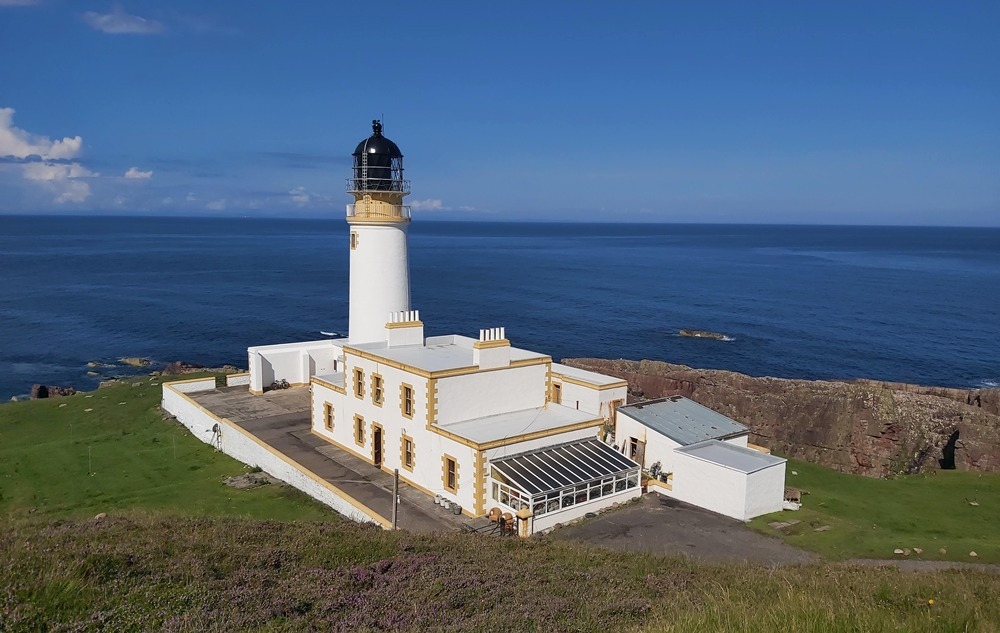
- Rubha Reidh Lighthouse: A 30-minute drive for a stunning land-based vantage point. This is one of the best spots to scan for Whales, Dolphins, and Basking Sharks.
- The Flowerdale Waterfall Path: An easy walk perfect for spotting Dippers in the burn and Woodpeckers in the ancient oaks.
The Wildlife Kit List
Be prepared for your Highland safari! We recommend packing:
- Binoculars: 8×42 is the ‘gold standard’ for our coastal light.
- A Polarised Lens: If you are a photographer, this helps cut sea glare to see marine life just below the surface.
- Quiet Layers: Avoid ‘crinkly’ waterproofs if you are hoping to see Otters or Deer—they have incredibly sensitive hearing.
The Wester Ross Wildlife Code: Respect, Protect, Enjoy
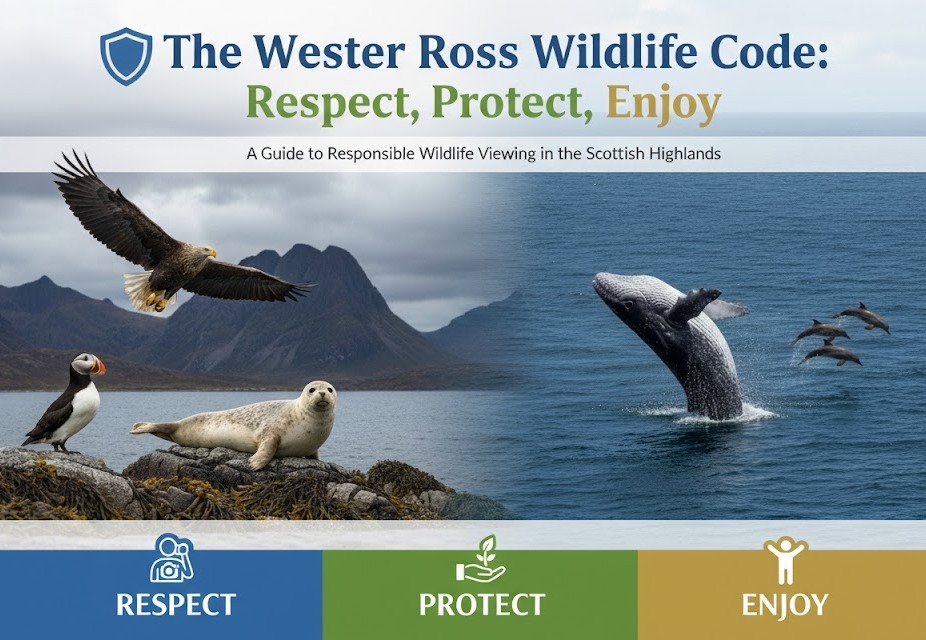
Watching wildlife is a privilege. In the Highlands, many species are legally protected. We ask all our guests to follow these ethical viewing guidelines:
- The ‘Golden Rule’ of Distance: If an animal stops feeding or looks directly at you, you are too close. Maintain at least 100m from whales, seals and porpoises.
- Paws and Play: Keep dogs on a short lead near the coast and moorland during nesting season (March–July) to protect ground-nesting birds.
- Drones: Flying drones near nesting eagles or marine life is illegal without a licence. Please keep them grounded in wildlife-sensitive areas.
- Leave No Trace: Please ensure every piece of litter returns to the Lodge with you. Marine plastic is a major threat to our local whales and seabirds.
Your Highland Wildlife Calendar
March — April: The Awakening
- Highlight: Golden Eagles & Black Grouse.
- What to look for: Watch for the spectacular ‘Sky Dancing’ courtship displays over the ridges and listen for the ‘bubbling’ of the grouse on the moors.
Late April — July: Seabird Season
- Highlight: Puffins & Guillemots.
- What to look for: This is the peak window for Shiant Isles boat trips. Thousands of puffins return to land to breed during these months.
May — September: The Big Blue
- Highlight: Minke Whales & Basking Sharks.
- What to look for: The North Minch is at its calmest and most nutrient-rich. Look for the ‘Puffing Pigs’ (Porpoises) in the bay and whales further offshore.
October — November: The Autumn Rut
- Highlight: Red Deer Stags.
- What to look for: A truly primal experience. Listen for the stags bellowing across the glens as they compete for dominance.
Year-Round: Resident Gems
- Highlight: Otters, Seals & Pine Martens.
- What to look for: These locals don’t follow a calendar! Keep your eyes peeled at dawn and dusk along the shorelines and woodland edges.
Share Your Sightings
We love hearing about your discoveries! We are currently looking into setting up a Community Sightings Board in The Lodge, to help guests share their latest highlights. In the meantime, whether it’s a Sea Eagle over the harbour or an Otter on the coastal path, please share your discoveries with our team or tag #GairlochHighlandLodge on social media to help fellow travellers plan their day.
Stay With Us
Ready to start your own Highland safari? Gairloch Highland Lodge is the perfect base for wildlife enthusiasts. After a day of spotting eagles and seals, return to the comfort of our lodge to relax and share your sightings.