The Playful Acrobats & Shy Guardians of Wester Ross
An Introduction to Our Coastal Cetaceans
While the deep waters of the Minch host giant baleen whales and apex predators, they are also home to some of the most dynamic small cetaceans in Europe. From the energetic, bow-riding Common and Bottlenose Dolphins to the discreet, fast-surfacing Harbour Porpoise. These species bring incredible vitality to the sea lochs surrounding Gairloch.
We are particularly fortunate in Gairloch to have a resident pod of Harbour Porpoises inhabiting our coastal waters almost all year round. The sheltered, deep waters of the bay provide a vital sanctuary where females return each year in early June to give birth to their young. Because of this thriving resident population, porpoises are commonly seen on many of the local boat trips operating right out of Gairloch Harbour. Making our village one of the most reliable places in the UK to observe these elusive marine mammals up close.
Anatomy & Identification Guide
Distinguishing between dolphins and porpoises at sea relies on observing key physical traits, size differences, and dorsal profiles:
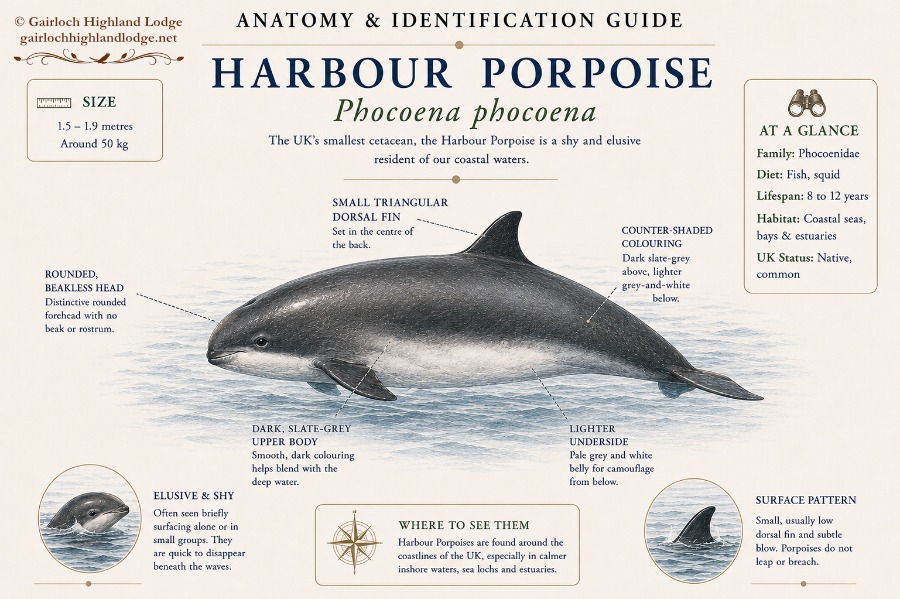
Harbour Porpoise (Phocoena phocoena)
Distinctive Appearance: The UK’s smallest cetacean, reaching just 1.5–1.9 metres in length and weighing around 50 kg. They have a rounded, beakless head, a small triangular dorsal fin right in the centre of their back. They have a dark slate-grey body with a lighter white underside.
Gairloch’s Resident Pod: We are lucky to have a pod living in Gairloch waters almost year-round. Females return to the sheltered, deep bay every year in early June to give birth to their calves.
Shy & Elusive: Unlike dolphins, they rarely leap or ride boat waves. Instead, they surface with a quick, rolling motion accompanied by a sharp puffing sound as they exhale—earning them the nickname “Puffing Pigs.”
Reliable Sightings: Because they love the calm, sheltered waters of our loch, they are commonly spotted on local boat trips operating right out of Gairloch Harbour, especially on flat-calm days!
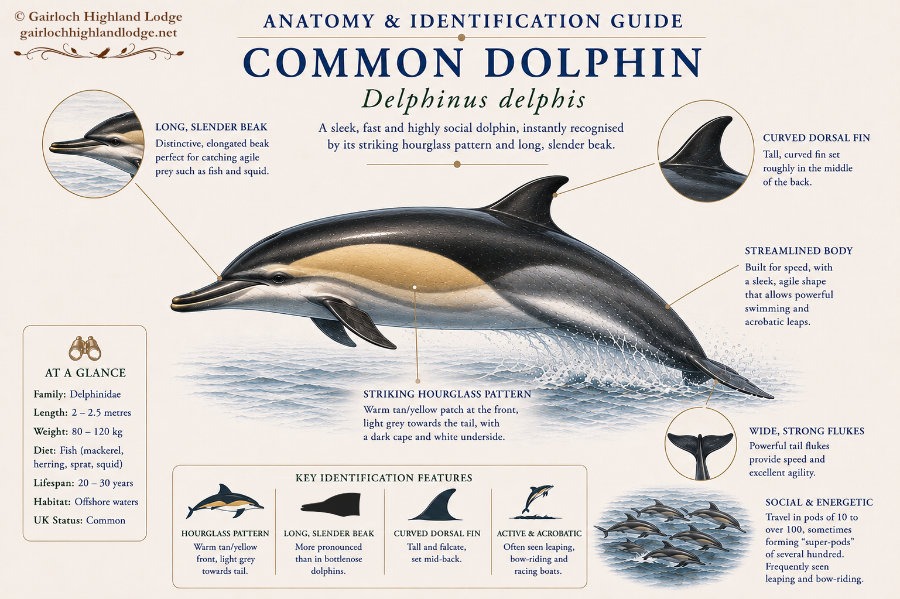
Common Dolphin (Delphinus delphis)
Distinctive Appearance: Grows to 2–2.5 metres long. They are easily spotted by the striking, tan-and-grey “hourglass” pattern along their sides, a dark V-shaped “cape” under their fin, and a long, slender beak.
Huge, Energetic Pods: Highly social creatures that travel in groups of 10 to over 100. On special occasions, multiple groups merge into “super-pods” of several hundred dolphins!
Team Hunters: They work together to herd shoals of mackerel, herring, and sprat into tight “bait-balls” near the surface, often hunting right alongside Minke whales and diving gannets.
Ocean Acrobats: Famously playful and fast, they love to leap high out of the water, perform acrobatic flips, and race over from far away to ride the bow waves of passing boats.
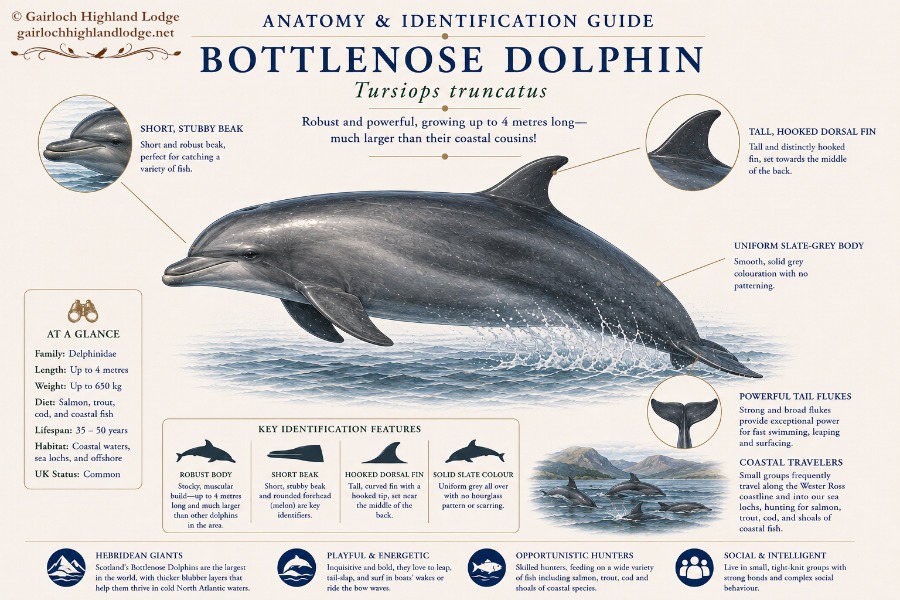
Bottlenose Dolphin (Tursiops truncatus)
Distinctive Appearance: Robust and powerful, growing up to 4 metres long—much larger than their coastal cousins! They feature a uniform slate-grey body, a short stubby beak, and a tall, distinctly hooked dorsal fin.
Hebridean Giants: The Scottish Bottlenose Dolphins are the largest in the world, having evolved thicker layers of blubber to thrive in our chilly North Atlantic waters.
Playful & Energetic: Famously inquisitive, they are known for dramatic leaps, tail-slaps, and coming right up to boats to surf in the wake or ride the bow waves.
Coastal Travelers: Small groups frequently travel along the Wester Ross coastline and into our sea lochs, hunting for salmon, trout, cod, and shoals of coastal fish.
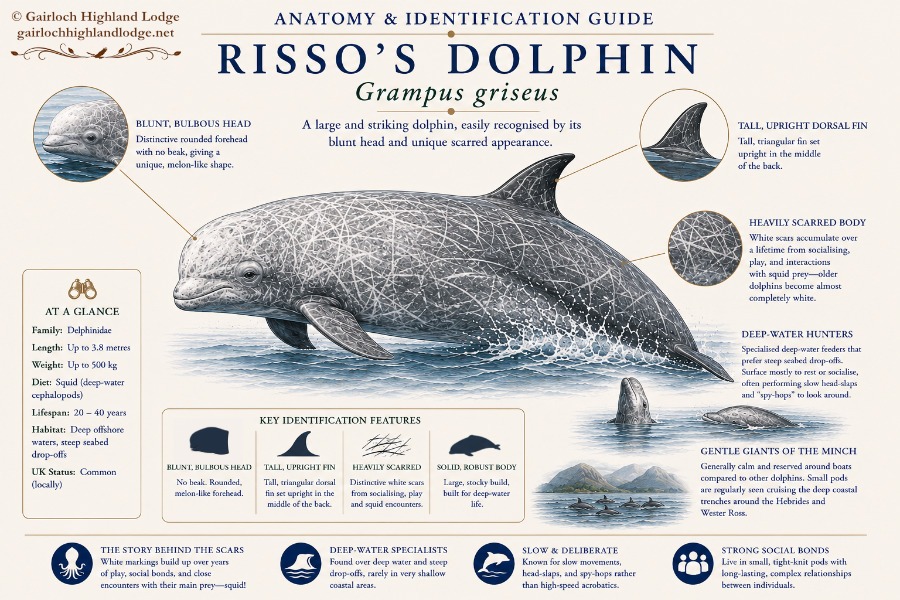
Risso’s Dolphin (Grampus griseus)
Distinctive Appearance: A large, striking dolphin growing up to 3.8 metres long. They are easily recognised by their blunt, bulbous head (with no beak), a tall, upright dorsal fin. Their body is heavily covered in white scars that turn older adults almost completely white.
The Story Behind the Scars: Their unique white markings accumulate over a lifetime from playing, socialising with pod members, and close encounters with their favourite prey, squid.
Deep-Water Hunters: Specialised deep-water feeders that love steep seabed drop-offs. They surface mostly to rest or socialise, often performing slow, deliberate head-slaps and “spy-hops” to look around.
Gentle Giants of the Minch: While generally more calm and reserved around boats than Bottlenose or Common Dolphins, small pods are regularly spotted cruising the deep coastal trenches around the Hebrides and Wester Ross.
Fascinating Behaviours in The Minch
Small cetaceans exhibit remarkably different personalities and surface behaviours across the waters of Gairloch:
Echolocation & Foraging: All species use high-frequency acoustic clicks to navigate and hunt in dark or murky coastal waters, pinpointing fast-moving shoals of sand eels, herring, sprat, and mackerel.
Maternal Care & Nursery Bays: During June and July, lucky observers in Gairloch can spot mother porpoises swimming in close formation with tiny, newborn calves, utilising the calm inner loch waters to protect their young while teaching them to hunt.
Acrobatic Displays: While porpoises maintain a quiet profile, Common and Bottlenose Dolphins frequently put on incredible displays, leaping metres clear of the water and tail-slapping to communicate across miles of ocean.
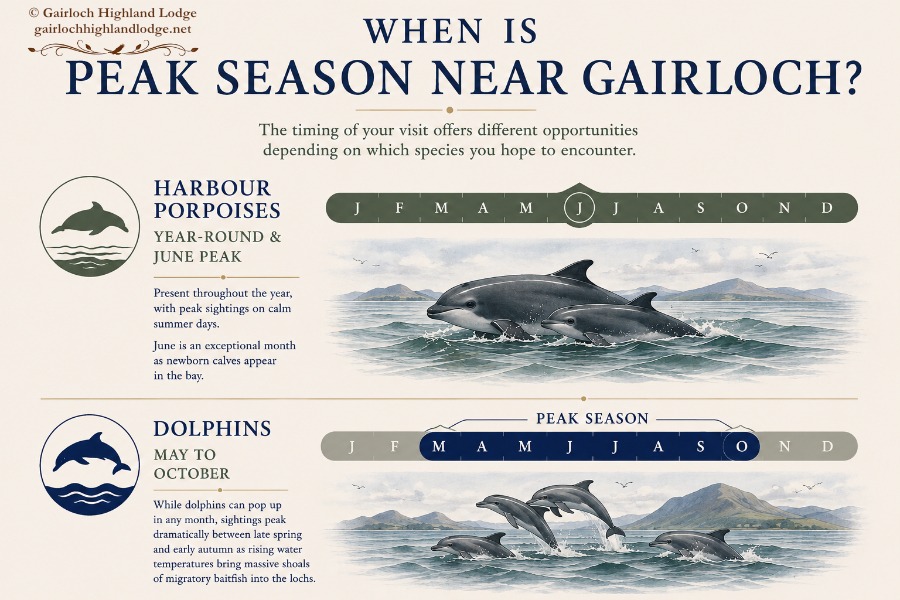
When is Peak Season?
The timing of your visit offers different opportunities depending on which species you hope to encounter:
Harbour Porpoises (Year-Round & June Peak): Present throughout the year, with peak sightings on calm summer days. June is an exceptional month as newborn calves appear in the bay.
Dolphins (May to October): While dolphins can pop up in any month, sightings peak dramatically between late spring and early autumn as rising water temperatures bring massive shoals of migratory baitfish into the lochs.
The Science: Resident Pods & Hebridean Photo-ID
Scientists and marine researchers, including the Hebridean Whale and Dolphin Trust (HWDT), meticulously track small cetaceans in the region:
Site Fidelity in Gairloch: Long-term studies confirm that Gairloch’s deep waters serve as an essential nursing and foraging habitat, exhibiting high “site fidelity” (resident animals returning consistently to the same bays).
Fin Identification: The trailing edges of dolphin dorsal fins acquire unique nicks and notches over time. By cataloguing these natural markings, researchers trace individual movements between the Inner Hebrides, the Minch, and even the eastern Moray Firth.
Conservation & Local Stewardship
Because coastal cetaceans live close to human activity, they face specific environmental pressures:
Protected Habitats: In recognition of their ecological importance, key areas around the Hebrides and the Minch have been designated as Marine Protected Areas (MPAs) specifically to safeguard Harbour Porpoises and their foraging grounds.
Bycatch & Marine Litter: Accidental entanglement in commercial fishing gear and plastic ingestion represent ongoing threats to coastal species.
Acoustic & Vessel Disturbance: High-speed boat traffic and marine noise can disrupt critical echolocation and mother-calf communication. Responsible wildlife viewing guidelines ensure local boat charters maintain respectful distances and speeds around resident pods.